

Associate Program Manager, Publishing Ethics, IEEE
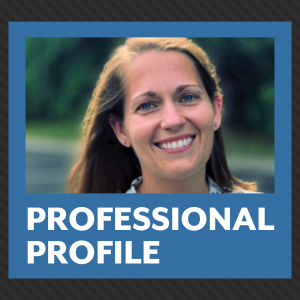

Tell us a bit about yourself. Where are you from, and what did you study? Where are you currently based?
I live in New York City and grew up in South Florida. When I started college, I originally thought I wanted to be a Physical Therapist. After completing many prerequisites, I discovered my love of Chemistry and ended up earning a dual major in Chemistry and Health Studies from Utica University. I went on to get my Ph.D. in Chemistry from Case Western Reserve University, then did a postdoctoral fellowship with Dr. Kirk Schanze at the University of Texas at San Antonio.
Describe your current role and organization. What are your main responsibilities? What type of organization do you work for?
I am a member of the Publishing Ethics Team at IEEE. My main responsibility is upholding the integrity of the IEEE’s scientific record. I work with all components of IEEE’s publishing portfolio, but more recently, my focus has shifted to large-scale investigations and helping develop ideas for misconduct detection earlier in the publication cycle.
Walk us through a typical day in your role. What challenges do you face? What opportunities do you encounter?
My days are always a little different, which is one of the things I enjoy most. Some days I may really get into the nuts and bolts of a large investigation and focus more on collecting and analyzing data; other days may be more strategy-heavy, where I’m working with some of our dedicated volunteers and/or colleagues to help improve our misconduct processes or talk through difficult cases. I am also involved with various STM and SSP committees and serve as a COPE Council member.
One of the most challenging aspects of my job is delivering what sometimes seems like endless bad news – whether to colleagues when we learn about a problem, or to authors when we need to inform them about a misconduct case they’re involved in. Facing these challenges has taught me valuable skills, and it makes me feel good to know that IEEE and I are working diligently to help protect the integrity of the scientific record.
Share your journey in scholarly publishing. What was your first role in this field, and how did you land it? What path led you to your current position? What unexpected challenges have you faced?
My postdoctoral advisor was very active with the American Chemical Society, and this is where I first got a look at the editorial side of publishing. After completing my postdoc, I got my first publishing job at AIP Publishing (AIPP) as an in-house Associate Editor for Applied Physics Reviews and its eventual spinoff titles. During my 4 years at AIPP, I also worked to launch several hybrid and open-access journals.
My first manager at AIPP was how I got into my current role. He left AIPP and joined IEEE to expand its Publishing Ethics and Conduct department. I’m a huge fan of mystery books/movies/tv shows – all of it, and when he contacted me with the opportunity to use my love of mystery (problem) solving in my everyday job, I jumped at the opportunity. Sometimes the work can be discouraging – when I was still in research, the thought of manipulating data or stealing someone else’s work never crossed my mind, and working with it daily can be frustrating. However, my teammates can all help make the day a little brighter, and it makes me feel a little better knowing that my work is making an impact.
Can you share a memorable project, achievement, or pivotal moment in your career development? Was there a defining moment or influential person who shaped your career?
Looking back, I think my postdoc advisor, Dr. Kirk Schanze, ultimately shaped my publishing career more than anyone else. At the time, he was the Editor-in-Chief of ACS Applied Materials & Interfaces, and I learned a lot about the editorial side of publishing and what it meant to lead and effectively manage a journal. He was also extremely helpful when it came time to prepare and apply for various publishing positions.
Once I got into publishing, my first manager at AIPP (and now my current manager at IEEE), Luigi Longobardi, and my first mentor in STM’s mentoring program, Erin Foley, have also been huge assets to me.
What tools, websites, and organizations are essential for your career growth? How do you stay up to date on industry trends and developments?
I subscribe to a variety of industry newsletters (SSP, STM, COPE, etc.) and attend webinars/conferences when possible. I also follow various sleuths on social media platforms like LinkedIn. I think one thing that has helped me the most is taking advantage of mentorship programs within IEEE and through SSP and STM. Getting updates from industry events and newsletters is still very helpful, but having insights into more tailored questions has been the most valuable for me.
In your experience, what skills or qualities are essential for success in scholarly communications?
In my current role, attention to detail and flexibility are probably the most important. During investigations, I need to be especially diligent to ensure every detail is accurate and accounted for, and to stay flexible as new technologies emerge to support misconduct detection. New tools are always being developed, and part of the challenge of integrating them is figuring out how they fit into our current workflow and how we can adapt our workflows to best optimize the new tools.
Once we are further into a case, clear and concise communication is also critical. I work with editors, authors, and vendors from all over the world, and not leaving room for interpretation is extremely important.
What do you wish you knew more about in your field?
I would like to learn more about data science/analysis. I have a fairly strong background from my post-secondary education, but as I get more involved in cases involving large-scale ethical manipulation, I would like an easier way to identify patterns and analyze even large datasets.
What future trends do you foresee in the field of scholarly publishing?
In 2024, I was on a panel at the Charleston Conference, and I called for increased collaboration with universities/institutions to help combat publishing and research misconduct. This is slowly starting to happen, as databases tracking retraction counts now look beyond publishers and authors to where the authors of the retracted articles are affiliated. I think that as more public databases are developed that track these additional identifiers, there will be increased pressure from publishers on universities/institutions to hold their researchers more accountable for publishing unethical work. I hope we (publishers) can also start this conversation with funders, whose role is just as important.
What motivates you in your work? What keeps you passionate about your role in scholarly publishing?
Knowing that I’m helping ensure the integrity and accuracy of the scientific record is my strongest motivator. As someone who came from research, I have seen the difficulties labs and libraries face in securing funding, which have only become more difficult in recent years. Keeping fraudulent articles published not only negatively impacts other researchers (are you basing your next research question off of fake data?) but it also influences funding and university resources (did an artificially inflated CV nudge a grant proposal score or hiring decision over someone else?).
How do you balance your professional and personal life? Any fun facts or hobbies outside of scholarly communications?
I maintain a clear balance between work and home hours; non-traditional hours are needed because we are a global profession, but I treat them as an exception rather than the norm. One thing that helped me balance my work and home life best was being able to return to the office when I started at IEEE. The ability to separate my workspace and home space best enabled me to achieve the work-life balance. Outside I work, I do some volunteer work, I like to run (I ran my first NYC Marathon last year), and enjoy all of the great things NYC has to offer, especially the food.
What advice would you give to aspiring professionals in scholarly communications?
Stay curious. Scholarly publishing is always changing and gives you the opportunity to try new roles as new trends emerge. Even as a mid-career publishing professional, I have had so many opportunities to develop and grow my career. With that, it is important to stay engaged, build relationships, and put yourself out there. If you’re able, I would strongly recommend getting involved with committee work or a mentorship program. It is the best way to stay informed of new publishing trends that interest you and simultaneously develop skills.

