

Senior Publisher, Oxford University Press
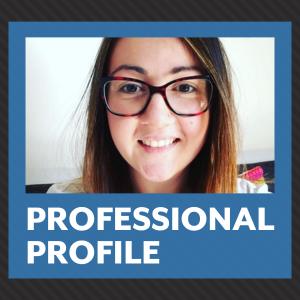

Tell us a bit about yourself. Where are you from, and what did you study? Where are you currently based?
I grew up in Ipswich, UK, and being a bookworm from a young age I always knew I wanted to study English Literature. I decided to combine that with French, and did my undergraduate degree at University of Exeter, with one year study abroad in Chambery, France. I went on to do a master’s in English Literature at the University of Leeds, and straight afterwards was able to land my first publishing job as a Marketing Assistant at Oxford University Press. I’m still based in Oxford 10 years later!
Describe your current role and organization. What are your main responsibilities? What type of organization do you work for?
I am currently a Senior Publisher in the science journals editorial team at Oxford University Press. I work closely with a variety of scholarly societies on their journal portfolios, helping to devise strategy, solve problems, and generally ensure things run smoothly. Being based at a not-for-profit, mission-led publisher and working closely with other charitable organizations, it’s amazing to be able to directly contribute to supporting researchers with their work.
Walk us through a typical day in your role. What challenges do you face? What opportunities do you encounter?
Each day is different, and that’s part of the joy of an editorial role! I spend a lot of time in my inbox, and on calls with society leadership, Editors-in-Chief, and colleagues within OUP in areas like marketing and production. Often most challenges and opportunities come from similar circumstances; one of my favorite aspects of my role is being able to navigate and align the different goals of the society, the Editor, and OUP in order to help the journals to thrive. Being able to plan an initiative, implement it, and see it succeed so that everyone is happy makes all the wrangling worthwhile!
Share your journey in scholarly publishing. What was your first role in this field, and how did you land it? What path led you to your current position? What unexpected challenges have you faced?
Whilst I’d always had a vision of what the publishing industry might be like from films (Jude Law in The Holiday springs to mind!), I’d never considered scholarly publishing; I had done a few internships helping out with conferences during my studies, but it wasn’t until I was embedded in journals publishing during my Marketing Assistant role that I realized how much more there was to it. I continued in marketing for a few years, over time moving up the ladder until I was a Portfolio Marketing Executive and was regularly participating in meetings with society journals that covered a range of topics. As an endlessly curious person, these meetings piqued my interest and I decided that I wanted to try my hand at an editorial role, so I could learn more about how journals work outside marketing. I was lucky to be offered a secondment for 12 months to give it a try, and it was a huge turning point in my career. The opportunity presented its own challenge; as a fixed term role, it meant I wasn’t guaranteed to be able to continue in Editorial afterwards, but I’m so glad I took the plunge because it turned out to be exactly what I wanted to pursue.
Can you share a memorable project, achievement, or pivotal moment in your career development? Was there a defining moment or influential person who shaped your career?
I think winning my first acquisition for OUP was a pivotal moment, and then working with the society to transition into the portfolio was incredibly valuable. It was a great opportunity to use all of the key skills I’d been developing in my career to date, and to be able to have complete ownership of a project of that scale was simultaneously a huge challenge and a wonderful achievement to pull off.
I’ve had several incredible line managers during my time at OUP, and I’ve been incredibly lucky that each of them has provided the exact support I needed at that moment. In particular, my first manager as an editorial member of staff continues to be a role model and inspiration for me, and we still have monthly catch-ups despite now being in different teams! They provided the initial nudge that gave me the confidence to apply for the editorial secondment, and I’m grateful they took a chance on a young marketer with big ideas and an insatiable drive to know things!
What tools, websites, and organizations are essential for your career growth? How do you stay updated with industry trends and developments?
In terms of staying up to date, there are a few newsletters that are invaluable – James Butcher’s Journalology and the Scholarly Kitchen are essential reading! Being able to attend conferences is also a really great way to learn first-hand about new initiatives and hear from different organizations; I have attended quite a few Researcher2Reader conferences in the UK, and particularly enjoy their workshop formats that allow for discussion. Being part of a membership organization like SSP is incredibly helpful too; as a co-chair of the Community Engagement Committee, I’m lucky to be able to interact with a huge range of individuals and see the outputs from our various Community of Interest Networks!
In your experience, what skills or qualities are essential for success in scholarly communications?
Maybe it’s a given, but we have to have excellent communication skills (written and spoken)! Not just that; we also have to be able to interact with a variety of people from all walks of life, from a scientist to an editorial office manager to an accountant, and still make sure everyone understands our vision and is on the same page. Other skills that come in handy are time management and organization skills, being able to think outside the box, and staying calm under pressure. For me, it’s also essential to have an enthusiasm for learning (not a day goes by when I don’t learn something new) and a passion for sharing knowledge; our job is to communicate vital research to ensure that it gets to the people who need it, after all!
What do you wish you knew more about in your field?
The limit does not exist! One of the reasons I love working in scholarly publishing is that I’m learning something every day – whether that’s industry updates, technology developments, or scientific discoveries published in the journals I work with. One aspect I’m really excited about at the moment is learning how to better use the huge amounts of data we have access to in order to help inform the decisions that Editors and/or publishing partners are making about journal strategy and how to position themselves in their fields. It’s all well and good having all the data, but if we can’t communicate it to the people who can use it, we’re missing a key piece of the puzzle! I’ve also got it in the back of my mind that I’d like to better understand how science translates into policy, and possibly try to contribute to making that process more effective. I think we’re all aware that the research we all work with as scholarly communications professionals can do amazing good and solve some of the world’s most pressing challenges, and I’d love to contribute towards a solution that facilitates those important research/policy/practice connections.
What future trends do you foresee in the field of scholarly publishing?
I think AI is going to present challenges and opportunities in equal measure; combined with the huge (and necessary!) push towards better trust and integrity processes, I think we’re going to see a lot of development in this space over the coming years.
What motivates you in your work? What keeps you passionate about your role in scholarly publishing?
As I think I’ve already mentioned, I am endlessly curious – and I think that’s a common trait amongst many of us in scholarly publishing! Learning new things is a huge motivation, as is working with mission-driven organizations; if I feel like I’m directly contributing positively to the world, I’m going to be motivated to do my best (so no lofty goals here!).
How do you balance your professional and personal life? Any fun facts or hobbies outside of scholarly communications?
Outside my day job I am a competitive Ballroom and Latin dancer – think Strictly Come Dancing/Dancing with the Stars style! It’s something I’ve been doing for over 20 years now, and being in on the dancefloor is my happy place. It’s a real departure from my ‘work vibe’ also; colleagues are always surprised that I’m a fan of glitter and rhinestones at the weekend! I am also still an avid reader – I’ll give any kind of fiction a try, and often have multiple books on the go at the same time because I like to pick and choose depending on my mood.
What advice would you give to aspiring professionals in scholarly communications?
I think my advice probably applies to most industries, but first things first – if you can work out what you most enjoy, that’s really helpful for finding roles where you can prioritize it (also, there’s a huge diversity of roles in scholarly communications, and there has to be some way you narrow it down!). Job shadowing can also be useful, in terms of experiencing a ‘day in the life’ of someone in a role you might be interested in, but also to show you what your transferrable skills might be, or even to shine a light on the value you might bring to an organization if you were in a similar role. I’d also advocate for getting up to speed on the current conversations in the industry. Newsletters like Journalology, or publications like The Bookseller and the Scholarly Kitchen, can give you an insight on the main topics absorbing an organization’s attention, and may even give you an edge in an interview or at a networking event!

