

Senior Program Manager, American Institute of Physics Publishing
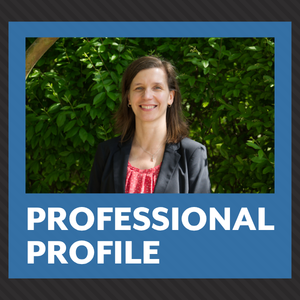

Tell us a bit about yourself. Where are you from, and what did you study? Where are you currently based?
I’m based in Maryland and have built my career at the intersection of technology, higher education, and scholarly publishing. I hold a Doctor of Education in Interdisciplinary Leadership, an MBA, and a bachelor’s degree in communication theory.
My work has consistently focused on how strategy, systems, and people intersect. More importantly, my work is focused on how to operationalize that intersection to deliver meaningful and sustained outcomes.
Describe your current role and organization. What are your main responsibilities? What type of organization do you work for?
I serve as a Senior Program Manager within the Strategic Alignment Office at AIP Publishing, where I lead enterprise-level initiatives that directly support organizational strategy and transformation.
My role is centered on driving alignment among executive leadership, product, editorial, and technology teams to ensure strategic priorities translate into executable, measurable outcomes. I oversee governance frameworks, portfolio visibility, and delivery structures that enable consistent, organization-wide execution.
A key focus of my work is not just delivering initiatives but also strengthening the systems and processes that enable scalable execution across the organization.
Walk us through a typical day in your role. What challenges do you face? What opportunities do you encounter?
I can easily say that no two days are the same for me! However, I’ll summarize the more typical days here.
My day is focused on maintaining alignment across a complex and evolving portfolio, which includes facilitating executive discussions, assessing program health, and proactively addressing risks and dependencies.
One of the consistent challenges in scholarly publishing is that complexity is often underestimated. Initiatives span multiple systems and stakeholder groups, yet organizations don’t always invest enough in the governance and alignment needed to execute effectively.
I see that gap as an opportunity. Strong program leadership isn’t just about tracking work. Rather, it’s about creating clarity, enforcing prioritization, and ensuring that teams are working toward shared, strategic outcomes rather than isolated deliverables.
Share your journey in scholarly publishing. What was your first role in this field, and how did you land it? What path led you to your current position? What unexpected challenges have you faced?
I began my career in higher education IT, moving from technical roles into project and program leadership. A defining experience was helping to establish and scale a Project Management Office at Loyola University Maryland, where I led governance development and introduced structured project practices across the institution. I led their Community of Practice effort and created a Change Advisory Board during my tenure.
My transition into scholarly publishing was a natural progression. I was drawn to the complexity of the environment and the opportunity to operate at a more strategic level, applying governance, systems thinking, and cross-functional leadership in a mission-driven industry.
Can you share a memorable project, achievement, or pivotal moment in your career development? Was there a defining moment or influential person who shaped your career?
Building and institutionalizing a Project Management Office was a foundational leadership experience. It required not only designing processes but also influencing organizational behavior and driving adoption across diverse stakeholders.
More recently, leading a transformation to modernize article commissioning workflows at AIP Publishing stands out as a high-impact initiative. By organizing cross-departmental teams and streamlining processes across systems, we reduced manual effort and improved operational efficiency.
Experiences like these reinforce a core belief of mine: operational excellence is often undervalued yet one of the most powerful drivers of sustainable organizational performance.
What tools, websites, and organizations are essential for your career growth? How do you stay updated with industry trends and developments?
I find that it is essential to interact with organizations that support both professions and industries.
For my profession, the most important organization, and one that continues to provide excellent training and support, is the Project Management Institute, or PMI. I attended several of their AI training courses last year and learned so much about what I could do with AI. PMI has also created its own AI tool that is geared toward supporting project managers in the field.
For the scholarly publishing industry, I make sure I stay engaged with organizations like SSP. I attend their webinars and their annual conferences. I find SSP provides the industry insights I am seeking, alongside diverse perspectives on the fundamentals of the work and the impactful changes on the horizon.
While tools such as Smartsheet and Jira are critical for execution, I believe there is often too much emphasis on tooling and not enough on the discipline behind how those tools are used. Effective governance, communication, and prioritization ultimately matter more than any single platform.
In your experience, what skills or qualities are essential for success in scholarly communications?
- Strategic thinking paired with disciplined execution
- The ability to lead through ambiguity and organizational complexity
- Strong stakeholder influence, particularly at the executive level
- Systems thinking across people, processes, and technology
- One of the most overlooked skills is the ability to say no, which is truly the opportunity to reframe priorities so that organizations focus on what drives impact.
What do you wish you knew more about in your field?
In the project management field, I want to know more about how we can properly position AI tools in support of the daily tasks assigned to a project manager. I want to understand the real issues and not follow the panic or the hype. We’re not going to exclude the function of project managers any time soon. We may need to operate differently and incorporate AI tools to do so, and that’s what I want to understand more deeply.
How can we support a project manager to deliver results while at the same time not burden our project teams with administrative overhead?
Because of this curiosity and focus of mine, I find AI thought leaders to follow on LinkedIn. I have learned so much from what they post and the research studies they share. I take this learning back to my colleagues and ask them what they think.
What future trends do you foresee in the field of scholarly publishing?
Scholarly publishing needs to make some important changes. While the market is moving toward more integrated, data-driven ecosystems, with increasing emphasis on automation and platform connectivity, the biggest challenge remains with how institutions function.
It seems that institutions will struggle not because they lack the tools to take advantage of the marketplace happenings, but because they lack the governance and firm decision-making needed to fully leverage them. There are always going to be opportunity costs.
The organizations that succeed will be those that treat execution as a strategic capability, not just an operational function.
What motivates you in your work? What keeps you passionate about your role in scholarly publishing?
I’m motivated by people. I find them endlessly fascinating. In working with teams, I find the opportunity to lead complex, cross-functional initiatives that create measurable impact. In
my role, I bring clarity to ambiguity and enable teams to become highly performing. We move forward with focus and organization, all heading toward the same destination.
How do you balance your professional and personal life? Any fun facts or hobbies outside of scholarly communications?
I have been a yoga practitioner for years. It helps me find balance, focus, and perspective. I am enrolled in the Yoga Renew 200-hour course to learn yoga more deeply through teacher training. I want to be a lifelong student within my yoga practice, so I love continued exposure to new teachers that I’ve received in this teacher training.
Alongside being a student, I am also a teacher. I am an adjunct professor teaching a project management fundamentals course at Villanova University (Go Wildcats!) in their College of Professional Studies. I enjoyed spending part of 2024 redesigning this course and then teaching it in 2025 and beyond.
What advice would you give to aspiring professionals in scholarly communications?
I am a lifelong student! I love to take classes and attend trainings, so try to be intentional about developing both your technical expertise and your leadership capability. Seek out opportunities that expand your scope and expose you to complexity, as well as consistently network throughout your company and into the scholarly publishing community.
Also, don’t underestimate the importance of understanding how organizations actually function. Career growth is accelerated when you can connect strategy to execution and help others do the same.

