

Associate Editor, American Veterinary Medical Association
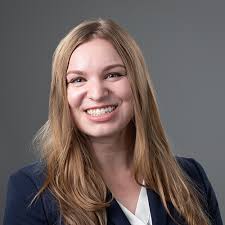

Tell us a bit about yourself. Where are you from, and what did you study? Where are you currently based?
I am from Aurora, Illinois. I graduated from the University of Illinois with a Bachelor of Science in Animal Science in 2016 and my Doctor of Veterinary Medicine from the University of Illinois College of Veterinary Medicine in 2020. I am currently based in Bloomingdale, Illinois.
Describe your current role and organization. What are your main responsibilities? What type of organization do you work for?
I work for the American Veterinary Medical Association. I am an Associate Editor for the Journal of the American Veterinary Medical Association (JAVMA) and the American Journal of Veterinary Research (AJVR). My main responsibilities are to evaluate the scientific rigor and integrity of manuscripts submitted to JAVMA and AJVR, produce and co-host the Veterinary Vertex Podcast, and manage the journals’ social media accounts and email campaigns.
Walk us through a typical day in your role. What challenges do you face? What opportunities do you encounter?
No two days are the same in my role! I wear a wide range of hats. I may start my day recording a podcast episode, transition to managing manuscripts, draft an e-letter to our authors or readers, and end the day scheduling social media posts. The main challenge I face as an Associate Editor is research integrity. I encounter opportunities to connect with readers, authors, and reviewers daily, which I enjoy!
Share your journey in scholarly publishing. What was your first role in this field, and how did you land it? What path led you to your current position? What unexpected challenges have you faced?
After graduating from vet school, I completed a Small Animal Medicine and Surgery Rotating Internship at VCA Aurora Animal Hospital, followed by a Veterinary Fellowship at the Vancouver Aquarium. I transitioned from clinical medicine to scholarly publishing in 2022 when I began working for the Publications Division of the American Veterinary Medical Association as the Social Media Editor in 2022. After a few months, I transitioned to an Associate Editor, which is my current role. Unexpected challenges I faced include learning about publishing! My background is clinical medicine, and I’ve learned a lot about the scholarly publishing field over the last few years.
Can you share a memorable project, achievement, or pivotal moment in your career development? Was there a defining moment or influential person who shaped your career?
Publishing my first manuscript in vet school was a pivotal moment in my career development. I learned a lot through designing my own study, carrying out field research, and writing up the results with my mentors Drs. Gregory Lewbart, Roy Yanong, and Nicole Stacy.
What tools, websites, and organizations are essential for your career growth? How do you stay updated with industry trends and developments?
Staying connected through scholarly publishing organizations is essential for my career growth. I stay updated with industry trends and developments through the Council of Science Editors (of which I serve on various committees) and the Society for Scholarly Publishing. I enjoy attending their annual meetings and chairing sessions. I also subscribe to several emails from other publishing groups to stay apprised of trends.
In your experience, what skills or qualities are essential for success in scholarly communications?
Clear, precise communication, deep attention to detail with big-picture thinking, strong editorial judgement, project and workflow management, curiosity and adaptability, ethical awareness and integrity, and a service-oriented mindset are essential for success in scholarly communications.
What do you wish you knew more about in your field?
I wish I knew more about the scholarly publishing ecosystem to understand policies like open access, data sharing, and ethics requirements.
What future trends do you foresee in the field of scholarly publishing?
Broader adoption of open access and new funding models, integration of open science practices, new metrics beyond citations, evolving peer review models, use of AI and automation, enhanced publishing platforms and interoperability, experimentation with content forms, greater emphasis on ethical standards, and institutional and community publishing models are future trends that I foresee in the field of scholarly publishing.
What motivates you in your work? What keeps you passionate about your role in scholarly publishing?
I’m motivated to support evidence-based practices. Fostering information literacy keeps me passionate about my role in scholarly publishing.
How do you balance your professional and personal life? Any fun facts or hobbies outside of scholarly communications?
I strive to live an integrated lifestyle for my professional and personal life. I enjoy reading, yoga, pure barre, cooking, and spending time with cats and my husband outside of scholarly communications.
What advice would you give to aspiring professionals in scholarly communications?
Stay curious and adaptable.

