

Founder & CEO, LibLynx
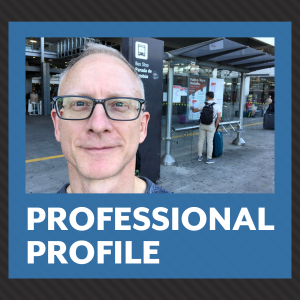

Tell us a bit about yourself. Where are you from, and what did you study? Where are you currently based?
I was born in Nigeria, grew up in Scotland, and spent my teens and twenties around London. My background is financial analysis, and I originally studied economics at LSE and qualified as an accountant, but quickly realised that I was more interested in the businesses behind the numbers. I moved to the US over 20 years ago to run a startup and never looked back!
Describe your current role and organization. What are your main responsibilities? What type of organization do you work for?
I run LibLynx, the company I founded in 2014, and like all small businesses, I wear many hats in addition to CEO. We’re a fully remote team with staff across North America, Western and Eastern Europe, and across many time zones.
Walk us through a typical day in your role. What challenges do you face? What opportunities do you encounter?
What I love most about my job is the constant challenge across many disciplines, as I’m always learning and stretching my skills. A typical day can range from resolving emerging challenges in internal projects, drafting legal documents, a sales call with a potential client, collaborating with an industry working group, and thinking about how the changing environment impacts future product decisions. It’s a lot, but I wouldn’t have it any other way :0)
Share your journey in scholarly publishing. What was your first role in this field, and how did you land it? What path led you to your current position? What unexpected challenges have you faced?
I co-founded a streaming music startup with a friend back in the UK in 1999, at the height of the dotcom boom. Our idea was 5 years too early, but we eventually realised that libraries were subscribing because it helped address patron access issues, and so I moved to the US to run the business, knowing nothing about libraries or scholarly publishing. That business was bought by an innovative and hungry scholarly humanities publisher called Alexander Street Press, and I spent the next decade developing and launching electronic databases, including the first streaming audio and video databases for higher education. I learned a huge amount in this period, and that led me to launch LibLynx in 2014, as I wanted to continue innovating in a small, agile team. My biggest challenge was underestimating how reticent our industry is to embrace new ideas.
Can you share a memorable project, achievement, or pivotal moment in your career development? Was there a defining moment or influential person who shaped your career?
In 2003, my music startup was facing an existential crisis: the consumer market we were chasing didn’t exist, but there might be an opportunity in libraries if one of us moved to the USA. Over the space of a few months, my wife and I decided to move to a tiny basement apartment in New York with three suitcases and a three-month old baby. That decision changed the trajectory of our lives and those of our (now three) children, and we’ve never looked back.
What tools, websites, and organizations are essential for your career growth? How do you stay updated with industry trends and developments?
I invest a relatively large amount of time in staying on top of trends and have developed a variety of strategies over the years, as there is no one source. I selectively read a number of blogs and newsletters, including the Scholarly Kitchen. I volunteer a lot in societies and industry working groups, as it’s a great way to get exposure to new ideas. And I attend and present at various industry events throughout the year (which felt very intimidating at first, but definitely gets easier over time).
In your experience, what skills or qualities are essential for success in scholarly communications?
Curiosity and Determination. Our environment is constantly changing, and no one has the time to get you up to speed. The only way to stay ahead is to be intellectually curious – ask questions, search for answers, network to find the right people, present ideas, and be open to feedback, etc. It takes energy and a lot of self-motivation, but it pays back in spades. However, the path is always full of bumps and dead ends, and it’s easy to give up. If you can keep pushing through to find the right answers, you’ll quickly stand out from the crowd and grow in confidence in your ability to have an impact.
What do you wish you knew more about in your field?
The editorial process. As my background was in electronic databases, I never worked in a traditional book/journal editorial process, so I’ve had to learn about processes like submission, peer review, and production.
What future trends do you foresee in the field of scholarly publishing?
One related to my business is AI taking over mediation of content from traditional publisher websites and discovery services. Publishers will need to pivot towards formats geared towards machine consumption, rather than human consumption – we have the skills, but can we adapt before we get left behind?
What motivates you in your work? What keeps you passionate about your role in scholarly publishing?
My heroes were explorers when I was younger, and as someone who grew up with the first home computers, my version of exploration has been pushing the boundaries of digital services. The pivotal moments in my career are all about working in teams to overcome major challenges and deliver innovative services that break new ground – it’s quite the rush, and the growth that comes with success more than makes up for the many ups and downs en route. It’s definitely about the journey, rather than the destination.
How do you balance your professional and personal life? Any fun facts or hobbies outside of scholarly communications?
Honestly, I love what I do and have built a community of colleagues around me that I consider friends, so work doesn’t feel like ‘work’. However, spending so much time collaborating with people means that I love downtime away from it all, so my happy space is hiking in nature. One of my more unusual hobbies is tree climbing (here’s a short video I shared on LinkedIn about it).
What advice would you give to aspiring professionals in scholarly communications?
Be curious about our profession and don’t worry about asking stupid questions. I know it’s easier said than done, but in my experience, there are always other people who value the answer but maybe weren’t brave enough to ask – so be brave for them too! And volunteer in SSP and industry working groups – it’s a fantastic way to network and make new friends, to stretch yourself and acquire new skills, to grow your personal profile, and to make some lifelong friends!

