

Associate Editorial Director, PLOS
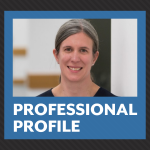

Tell us a bit about yourself. Where are you from, and what did you study? Where are you currently based?
I’m originally from Hertfordshire in the UK and have returned home after 15 years away. I studied Physics at Bristol University and then did a PhD in Biochemistry with Cancer Research UK at University College London. More recently, I completed my MBA at the Open University, which gave me the flexibility to study alongside work and family and allowed me to connect with an incredible group of leaders from around the world.
Describe your current role and organization. What are your main responsibilities? What type of organization do you work for?
I have been with the non-profit, mission-driven publisher PLOS for the past 5 years and recently moved from my publishing strategy role to work more closely with the editorial teams. In my new role, I am lucky to lead a set of change-making journals focused on the future of open science publishing. To do this, we work with researchers to understand how we can embed better open science practice in research communication in ways that work for diverse communities. I am also a HESI SDG Publishers Compact Fellow, which is a group set up to support researchers, educators, and the publishing community to create a sustainable future.
Share your journey in scholarly publishing. What was your first role in this field, and how did you land it? What path led you to your current position? What unexpected challenges have you faced?
My first publishing role was a short-term maternity cover position at Thomson Reuters, helping authors write accurate drug profiles for several Current Opinion journals. It was an early sign that I would have a career supported by many smart and passionate friends and colleagues. When that position came to an end, I used the experience to land a role at Nature Publishing Group (then Springer Nature), working first on the Nature Reviews journals and then Nature Communications and into leadership roles in the Nature Partner Journals. I moved to PLOS to support the launch of the first new journals in 15 years and subsequently had strategic and publishing oversight of the PLOS portfolio. Throughout this pathway, I have had the privilege of being supported by amazing mentors who encouraged me to stretch myself and take opportunities. This is something that is incredibly important to me to pay forward to the future leaders of our community.
Can you share a memorable project, achievement, or pivotal moment in your career development? Was there a defining moment or influential person who shaped your career?
Possibly the most pivotal career moment was my decision to join PLOS in 2019, which was driven by a wish to work in an organization focused on removing barriers and promoting inclusion in knowledge creation and sharing. PLOS is ambitious, and this provides me with an opportunity to work with incredibly smart people both in our industry and more widely to experiment and try to develop better solutions to the challenges research communication faces.
What do you wish you knew more about in your field?
Everything! I am a passionate life-long learner and have long understood that the people I work with will always have a lot to teach me. One of the true joys of my role is that one day I can be discussing with global experts about how we can support the fields of quantum information or complex systems, and the next working with my team on new research integrity tools and analysis. Learning something new every day!
What future trends do you foresee in the field of scholarly publishing?
I hope that we will see the development of a publishing ecosystem that evolves further to support research incentives that are equitable and fair and where there is a diversity of voices in what we publish. I am excited to see what we as a community can do to partner with researchers, funders, and institutions to make this a reality.
How do you balance your professional and personal life? Any fun facts or hobbies outside of scholarly communications?
I am lucky that I have a flexible work pattern, which means I am able to be there for my team but also be at the school gate some days – this has been incredibly important to me.
What advice would you give to aspiring professionals in scholarly communications?
Find the people who share your values and learn from them – opportunities will come from these interactions, and they might not be what you originally expected. And have fun!

