

Director of Book and Journal Production, American Psychological Association
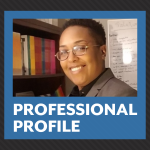

Tell us a bit about yourself. Where are you from, and what did you study? Where are you currently based?
I am a DMV native who has dedicated the entirety of my publication career to the American Psychological Association (APA). For over 15 years, I’ve played a major role in the development of APA Journals and now APA Books as the Director of Book and Journal Production.
Before joining APA in 2008, I earned my Bachelor of Arts Degree from Bowie State University in the field of Psychology. And then attended Trinity Washington University, earning my Master of Arts Degree in Counseling Psychology.
Describe your current role and organization. What are your main responsibilities? What type of organization do you work for?
I work for the American Psychological Association, leading the production process of scholarly books and journals. Duties include keeping 80+ journals on track for publication, as well as around 50 books per year. I lead a team of Book and Journal Production staff. I also spearhead new initiatives like Print on Demand and a journal production tracking system, as well as maintain our vendor relationships for composition and printing.
Walk us through a typical day in your role. What challenges do you face? What opportunities do you encounter?
A typical day includes a lot of meetings. My role is to consult or lead a multitude of initiatives in APA Publishing. As a result, I’m in 3-5 meetings a day to keep projects moving and touch base with my team to make sure they have what they need to keep projects I’m not leading directly moving.
Share your journey in scholarly publishing. What was your first role in this field, and how did you land it? What path led you to your current position? What unexpected challenges have you faced?
My first scholarly publishing role was as a Journal Production Specialist. I was already working at APA as an administrator in APA Journals, and when the role opened up. My then supervisor at the time recommended me for the position. Haven’t looked back since.
You cannot control people; you can only do your best to support them, but it’s up to them to either grow and learn or crash and burn. Given how much support I received throughout my career, it’s always been in me to return that investment to others who could benefit from it. But not everyone is ready for that type of investment or understands what they need and how to ask for it. Doesn’t make them bad people, but it does make them incredibly hard to predict, especially in management.
Can you share a memorable project, achievement, or pivotal moment in your career development? Was there a defining moment or influential person who shaped your career?
Absolutely, my current supervisor and mentor, Rose Sokol, PhD, took a chance on me when I applied for my first supervisory role. While I knew journal production front and back, I had no experience leading a team, but she didn’t allow that inexperience to keep me from advancing at APA. Instead, she sent me to several trainings that allowed me to hone my skills as a manager. I can honestly say, I would not be in the position I’m currently in, nor as effective a manager, without her investment in my professional development.
What tools, websites, and organizations are essential for your career growth? How do you stay updated with industry trends and developments?
Project Management!! I scream this from any rooftop I’m near! Project management (PM) changed my life! I used to tell people, “It was like someone showed me how to use a knife and fork.” I’d remark, “Before PM, it was like eating with my hands. I was getting fed, but it was messy and difficult to communicate with others on how to eat. However, with PM, we were able to eat cleanly, and it was easy to communicate to others how to go about eating with utensils.” I’d recommend project management to any and everyone who has to complete projects for their role.
What do you wish you knew more about in your field?
DEI. Every time I think I have a grasp on how to be equitable and inclusive, I learn a whole new way to do better. But I guess that’s a part of the work. One can never really know everything there is to know about DEI because it’s always evolving.
What advice would you give to aspiring professionals in scholarly communications?
Don’t limit yourself to editorial work. Every time someone tells me they have an interest in scholarly publishing, they always go straight to editorial. But there are so many different roles in scholarly publishing: production, marketing, sales, rights management, social media, and so on. So, I’d tell them if they have an interest in scholarly communications, think big and really consider what they enjoy doing.

